
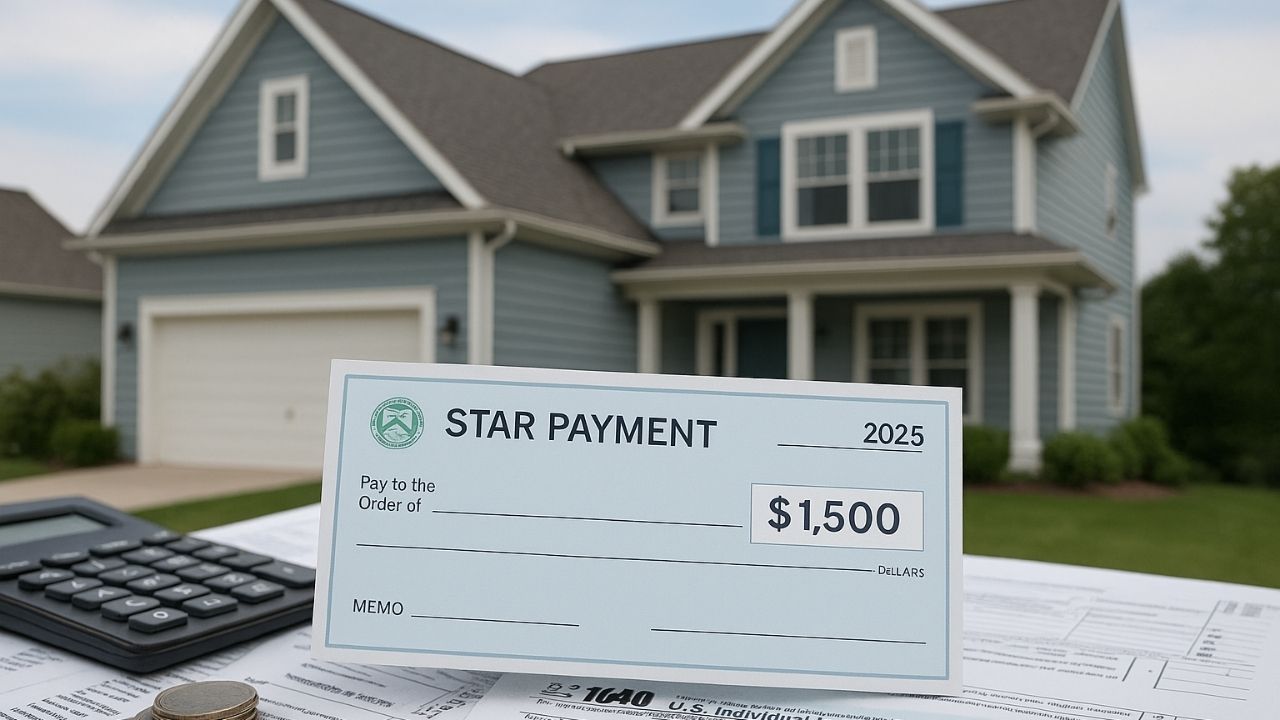
New York State has confirmed that homeowners will receive significant tax relief in 2025 through the School Tax Relief (STAR) Program, with payments ranging from $350 to $1,500 depending on income, age, and district-level school tax rates. The support arrives at a time when many households are coping with rising costs in housing, utilities, and essentials, making these stimulus-like payments an important financial buffer.
The STAR benefit provides either a direct credit or an automatic reduction in school property taxes, helping homeowners manage their yearly bills more effectively. As school taxes remain one of the most significant expenses for many New Yorkers, the 2025 STAR distribution provides predictable, well-timed assistance to millions of eligible residents.
Table of Contents
New York’s STAR Program Purpose and Impact

The School Tax Relief Program is one of New York’s longest-running initiatives supporting property owners. It was created to reduce the school tax burden for eligible primary residences, ensuring that homeowners receive timely assistance during tax due periods rather than waiting for refund cycles.
STAR plays a central role in maintaining affordability across the state, especially in high-tax districts where school levies consistently rise to meet educational funding demands. By offering predictable yearly relief, the program helps families and seniors avoid falling behind on payments and strengthens financial stability in communities.
The program also indirectly supports school districts. When taxpayers receive timely relief, delinquency rates decrease, ensuring that school budgets receive the funding they rely on. This dual benefit has made STAR a key component of the state’s long-term tax strategy.
Nearly three million homeowners and seniors are getting money back in their pockets this summer thanks to our STAR program!
See if you’re eligible and track your check: https://t.co/uR8Nds9GvThttps://t.co/78PAc2JVuC
— Governor Kathy Hochul (@GovKathyHochul) July 24, 2025
Two Categories of STAR Benefits

New York offers two distinct STAR benefits designed to support different household groups. Basic STAR applies to homeowners with incomes up to $250,000 and offers school tax reductions regardless of age. Enhanced STAR, however, is available only to homeowners aged 65 or older who earned $98,700 or less (2022 income), providing them with a notably larger benefit.
Basic STAR is widely used among working families and middle-income households who face significant annual school tax obligations. Enhanced STAR, on the other hand, helps seniors maintain homeownership during periods of rising living and medical expenses.
Both benefit types adjust based on local school district tax levels, which means homeowners in higher-cost areas such as Long Island or the Mid-Hudson region typically receive larger STAR values.

Expected Payment Amounts for 2025
The amount homeowners will receive in 2025 depends on the STAR category and school district tax calculations. While exact figures vary, statewide averages offer a reliable expectation for most homeowners.
| STAR Category | 2025 Estimated Payment |
|---|---|
| Basic STAR Credit | $350–$600 |
| Enhanced STAR Credit | $700–$1,500 |
The Enhanced STAR benefit reaches the upper end of the payment range due to its income-based structure for seniors and a higher exemption value applied in many districts. Payments arrive as direct checks, bank deposits, or reductions in tax bills.
Eligibility Requirements for 2025
To qualify for STAR in 2025, homeowners must satisfy several state requirements. The property must serve as the owner’s primary residence, and the homeowner must be registered with the New York State Department of Taxation and Finance. Income eligibility is determined using tax filings from two years prior, meaning 2023 filings are used for Basic STAR, while 2022 income determines Enhanced STAR eligibility.
STAR participation is automatically reviewed each year. Most homeowners do not need to reapply unless their address, income, or homeownership status changes. Seniors receiving Enhanced STAR undergo annual verification to ensure they remain within the income threshold.
How Payments Are Delivered
STAR benefits are provided in two formats: the STAR Credit and the STAR Exemption. The STAR Credit is paid directly to homeowners as mailed checks or electronic deposits. This method often results in slightly higher benefits and is now the standard option for new applicants.
Long-standing participants may continue to receive the STAR Exemption, which reduces the school tax amount directly on the property bill. No cash payment is issued under this format, though the tax reduction value is comparable to the credit calculation.
Payment timing depends on the school district’s tax schedule. Homeowners in areas where school taxes are due in July or August typically receive payments early in the summer. Districts with September, October, or later deadlines receive their STAR payments shortly before those tax bills are issued.
Regional Breakdown of STAR Funding
More than $2.2 billion in STAR benefits will be distributed statewide in 2025. The most significant allocations go to regions with high property values and numerous eligible households.
| Region | Total Relief | Homeowners Benefiting |
|---|---|---|
| Long Island | $698.4M | 582,000 |
| Mid-Hudson | $488.5M | 404,000 |
| Finger Lakes | $205.2M | 279,000 |
| Western New York | $178.5M | 320,000 |
| New York City | $158.6M | 483,000 |
These high-density regions receive the most STAR support due to their school tax structures and homeowner populations.
Importance for Families and Senior Citizens
With persistent increases in housing-related costs, the STAR Program remains vital for millions of New Yorkers. Families benefit from the predictable relief that helps offset yearly school tax increases, while seniors rely on Enhanced STAR to manage expenses on fixed incomes.
The program also promotes long-term community stability. By reducing the risk of homeowners falling behind on taxes, STAR supports balanced local budgets and reduces financial pressure on school systems. This makes STAR not only a homeowner benefit but a broader community support mechanism.
Homeowner Responsibilities to Maintain Benefits
Keeping STAR benefits active requires homeowners to update their information with the state. Address, ownership, and banking changes must be reported to avoid delays. Enhanced STAR participants must also complete annual income verification.
Failure to update records can result in missed payments or benefit suspension, making regular compliance essential.
FAQs
What is the maximum STAR payment homeowners can receive in 2025?
Eligible homeowners can receive between $350 and $1,500, depending on income, age, and district tax rates. Enhanced STAR recipients receive the highest amounts.
How do STAR Credit payments arrive?
Payments are delivered either as a direct deposit or a mailed check. Homeowners enrolled in the credit program receive funds before their school tax bill is due.
Do homeowners need to apply every year?
Most homeowners do not need to reapply. Eligibility is automatically reviewed unless ownership or income changes. Seniors receiving Enhanced STAR must verify income annually.
When will STAR checks be issued in 2025?
Payment timing varies by district tax schedule. Districts with summer tax deadlines receive checks earlier, while others receive payments closer to fall due dates.
Can homeowners switch from STAR Exemption to STAR Credit?
Yes. Homeowners may switch to the STAR Credit, which often provides slightly higher benefits, but once switched, they cannot return to the exemption.